Human rights promotion and education
Awareness, training and education to advance dignity, equality, justice, non-discrimination and citizen participation.
Makoki International Hub works through education, protection, documentation, research, advocacy, access to justice, democratic governance, peacebuilding and regional cooperation.
Research, mobilisation, advocacy and protection brought together in one architecture for action.
Awareness, training and education to advance dignity, equality, justice, non-discrimination and citizen participation.
Risk prevention, referral and accompaniment for defenders, environmental defenders, women, children, displaced people and other vulnerable groups.
Collection, verification, analysis, studies and investigations that produce reliable evidence for decision-making and protection mechanisms.
Evidence-based action to influence policy, reform and institutional practice while strengthening transparency, good governance and accountability.
University legal clinics, referral to remedies, legal assistance and advocacy for effective judicial safeguards.
Democracy, citizen participation, public integrity, citizen-institution dialogue and stronger governance.
Dialogue, mediation, peaceful conflict resolution, reconciliation and durable peace grounded in rights, justice and inclusion.
Collaboration with institutions, civil society, universities, regional mechanisms and international organisations in the DRC and Great Lakes region.
A report launched with the Centre for Human Rights at the University of Pretoria on the 2023 general elections and challenges of transparency, civic education and electoral accountability.
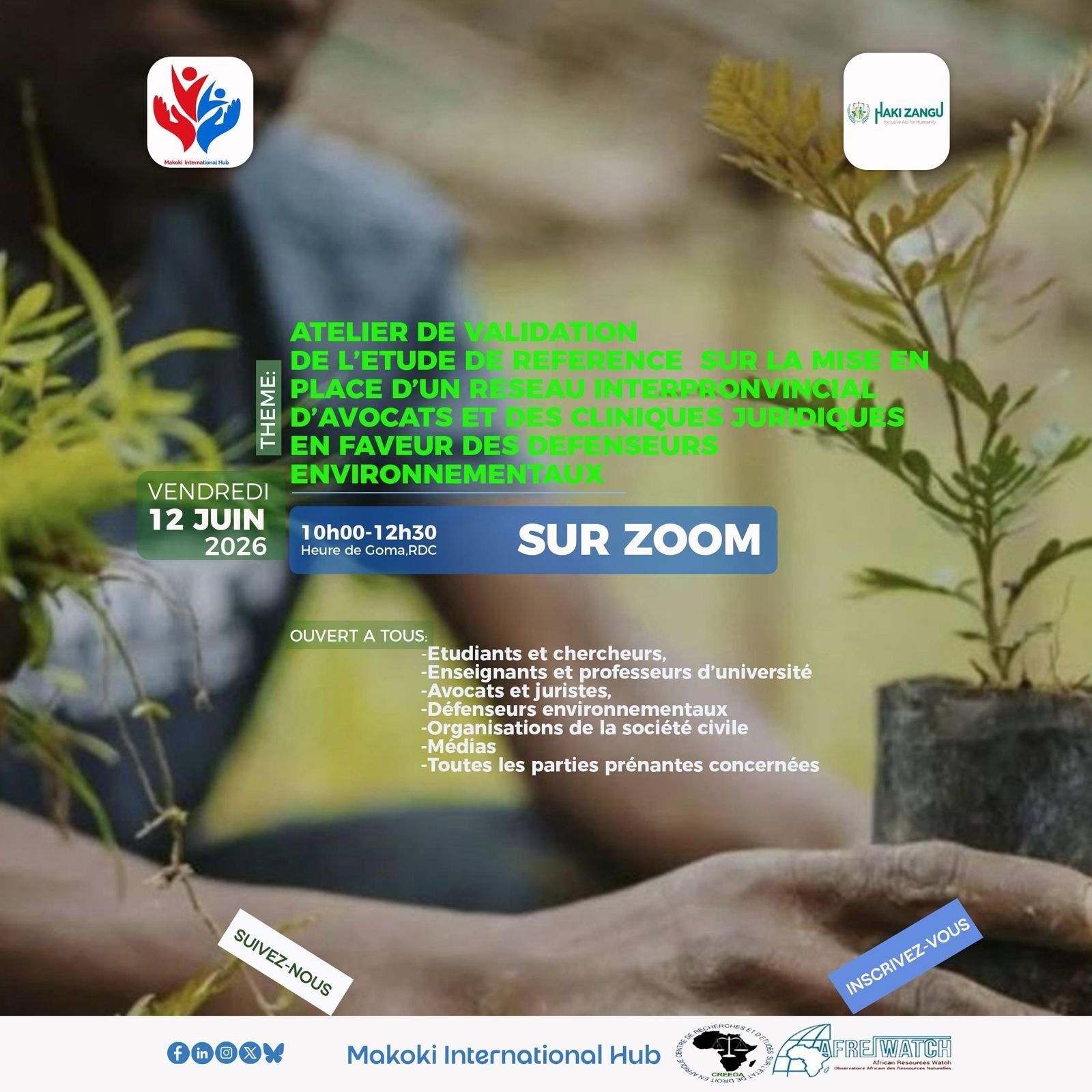
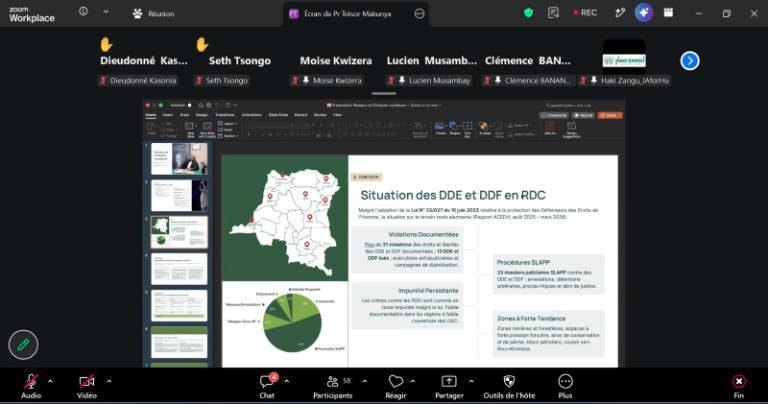
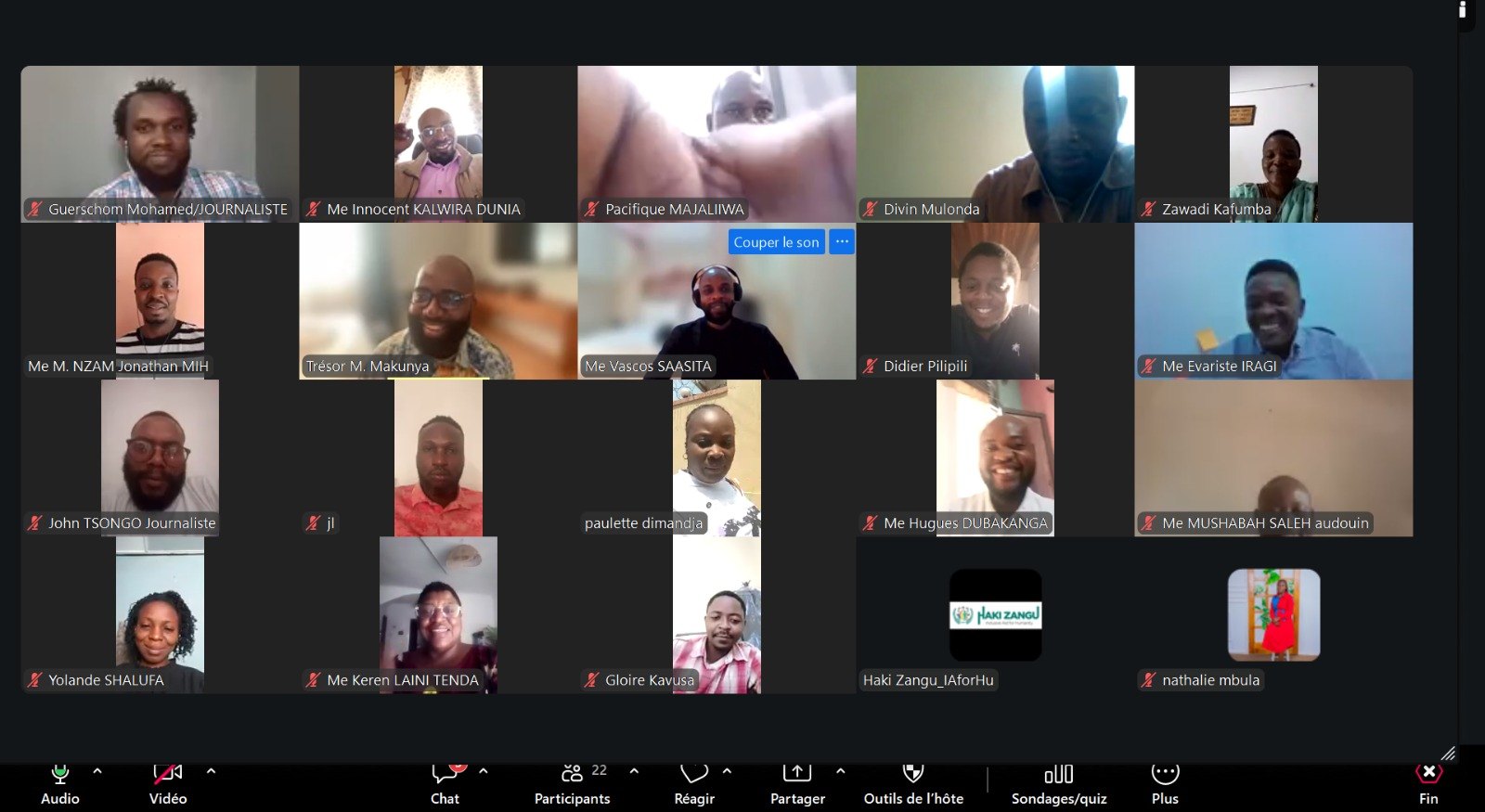
Integrated mechanisms including lawyer networks, university legal clinics, documentation, practical tools, legal assistance and advocacy, with AFREWATCH, CREEDA, Haki Zangu and support from Open Society Foundations.
Continental advocacy for ratification and entry into force of the Malabo Protocol, with particular focus on the DRC.
A 2025 campaign around proceedings before the African Court on Human and Peoples’ Rights, reaching approximately 1,200 people.
Each intervention is guided by dignity, equality, non-discrimination, inclusion, transparency, accountability, independence, impartiality, integrity and accountability to communities.