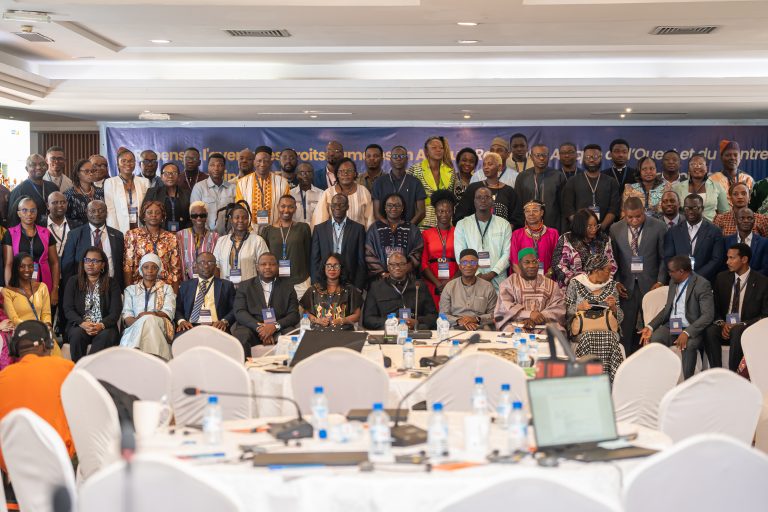
From 5 to 6 October 2026, the Executive Director of Makoki International Hub (MIH), Advocate Musa Nzamu Jonathan, attended a workshop at the Sultani Hotel in Kinshasa to validate an innovative medical care mechanism for human rights and environmental defenders (EHRDs) in the Democratic Republic of Congo (DRC). The workshop brought together networks of human rights and environmental defenders. It had three aims: to present the mechanism drafted by Advocate Drusilla Bret-Cunynghame-Robertson; to let participants help improve it; and to build ownership and buy-in among HRED organisations. It was organised by African Resources Watch (AFREWATCH) and the Centre for Research and Studies on the Rule of Law in Africa (CREEDA).
Rationale for the mechanism
EHRDs play an essential role in promoting justice and denouncing violations of fundamental rights. However, they face threats, harassment, intimidation, and other violations linked to their work. Many of them have no adequate pay or effective medical cover, so they remain at risk of common or chronic illnesses, sometimes with no help at all.
The first day of the workshop aimed to address a central question on how access to health care can become a lasting part of EHRDs’ protection in the DRC. Participants reviewed existing protection mechanisms and mapped the actors supporting defenders. AFREWATCH and CREEDA presented the innovative mechanism they propose. Networks from Kinshasa, Haut-Katanga, Tanganyika, Équateur, Lualaba, Kasaï Central, and Kasaï shared their experiences. When a defender needs medical care, these networks very often refer the case to the United Nations Joint Human Rights Office (BCNUDH) or to Freedom House.
Some networks have set up clinics to support defenders who suffer trauma after threats, violence, or harassment. Elsewhere, medical care remains rare. In those cases, the networks document violations with dedicated software, denounce them through press releases and reports, and hold dialogues with the authorities. This work sometimes puts their safety at risk, and they have limited digital security training. Overall, arrests, judicial harassment, and violence still shape the situation of defenders in the DRC.
International and regional mechanisms also exist, such as Front Line Defenders or the FIDH-OMCT Observatory. They review individual requests, assess the risks defenders face, and provide one-off financial support, namely medical care, legal assistance, security, relocation, transport, or family support. However, these mechanisms have limits, in particular the fact that they tie medical care to a specific incident, such as an arrest or torture. They therefore meet only part of defenders’ needs, who often live without adequate pay or medical cover.
A mechanism built for the Congolese context
Advocate Drusilla Bret-Cunynghame-Robertson then presented the mechanism, which she designed to meet the needs and realities of the Congolese context. Its governance rests on the general assembly, the steering committee (strategic direction), the technical committee (review of requests), the local focal points (relaying alerts, assisting defenders), and the provider networks. In her view, the mechanism must offer ongoing support and follow a national or territorial approach. It will have three functions: responding to medical emergencies, referring defenders to safe providers, and securely documenting trends. The idea is not to copy existing emergency funds, but to fill a gap with a broader medical solidarity scheme that covers both emergencies and unmet medical needs.
When it comes to mapping existing structures, especially in mining or conflict areas where defenders face risks, the Panzi model, dear to Dr Denis Mukwege, Nobel Peace Prize laureate, stands as a Congolese benchmark. It combines medical care, psychosocial support, legal assistance, and reintegration. It shows that a medical need calls for more than an isolated response, especially after violence and severe trauma. This holistic approach can inspire future mechanisms.
The RENFORCE consortium
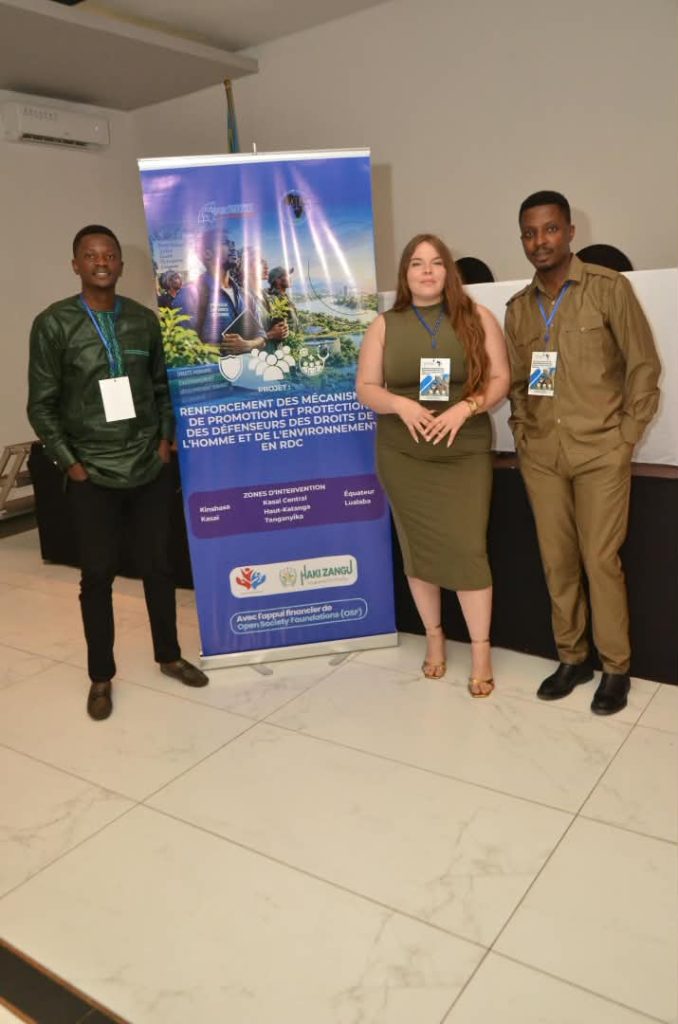
MIH and HAKI ZANGU Inclusive Aid for Humanity, both of which took part in the workshop, belong to a consortium with AFREWATCH and CREEDA. The first two organisations implement, in three provinces, the component “Networks of Lawyers and Legal Clinics for Stronger Protection of Environmental Defenders in the DRC” (RENFORCE), with financial support from Open Society Foundations.