In Kisangani, lawyers and coordinators of university legal clinics have documented, through participants’ testimony, the difficulties environmental defenders face in Yahuma, about 314 km from the provincial capital.
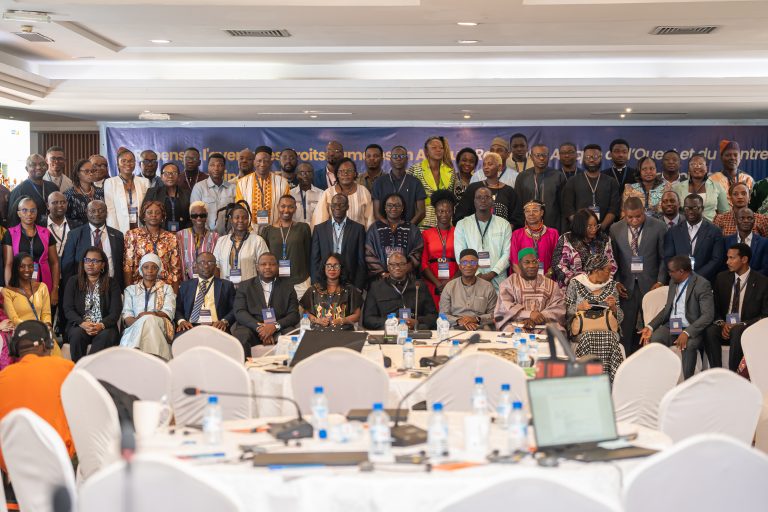
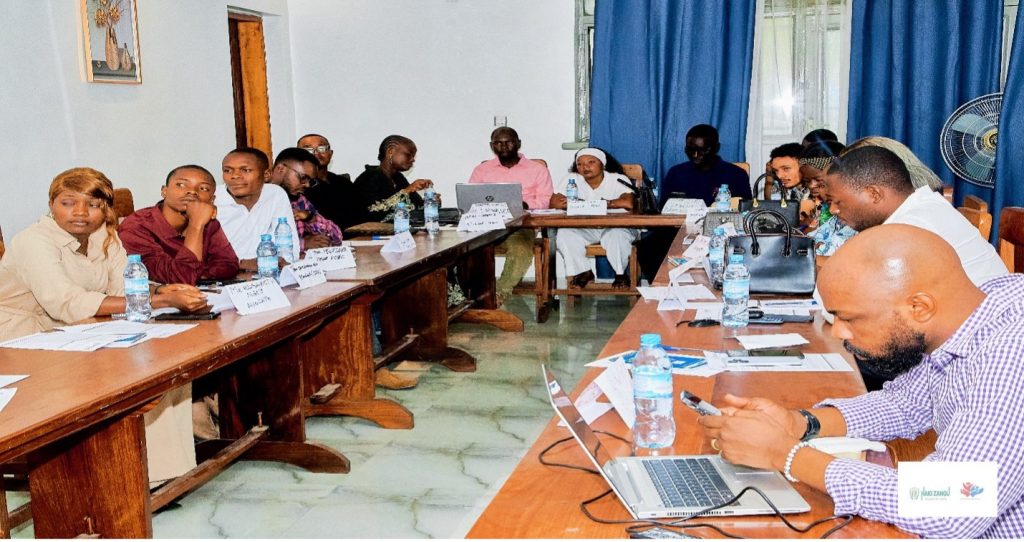
From 29 to 30 August 2026, lawyers who are members of the network and coordinators of university legal clinics took part in a two-day training session in Kisangani, held under the project “Network of Lawyers and Legal Clinics for Strengthened Protection of Environmental Rights Defenders in the DRC” (RENFORCE). The meeting was designed, among other aims, to build their capacity to protect and legally support environmental defenders.
Among the situations shared during the discussions, that of the territory of Yahuma drew particular attention. Situated roughly 314 kilometers from Kisangani, Yahuma is a severely landlocked territory, facing particular difficulties with road access. In this forest area, participants raised tensions between the logging company Booming Green and local communities. According to the participants, environmental defenders from Yahuma have on several occasions denounced what they regard as abusive practices in the exploitation of forest resources. They also reported threats of arrest against certain defenders because of their monitoring and advocacy activities. These concerns arise against a background of already documented tensions between Booming Green and some local communities in Yahuma. In March 2025, the provincial government dispatched a delegation to the territory to resolve the conflict over the exploitation of forest resources. A few months later, clashes were also reported in Lolingo, in the Bokala groupement, notably over community claims relating to the company’s social commitments.
For the participants in the Kisangani training, the problem is therefore not confined to the conflict between the communities and the logging company. It also concerns those who, within these communities, document the problems and raise environmental alerts. The environmental defenders whom participants met or referred to face daily difficulties in carrying out their monitoring work. Their tasks include documenting logging activities, gathering community concerns, and transmitting alerts to the authorities. Yet, according to testimony collected during the training, some of these reports reportedly did not receive the expected follow-up. At the same time, the defenders themselves were reportedly exposed to threats of arrest. In the view of Maître Rachel Kabamba, a lawyer at the Tshopo Bar and a member of the lawyers’ network, this situation creates a troubling imbalance: those who report problems connected with the exploitation of forest resources find themselves under pressure in turn. The lawyers accordingly stressed the need not to wait until a threatening situation has escalated into judicial proceedings or into a more serious violation before intervening. In their view, a defender facing a threat linked to their work should be able to obtain legal guidance and accompaniment promptly.
The question is all the more pressing given that Yahuma’s remoteness complicates access to essential services. The Congolese Press Agency reports, in particular, that the territory’s population encounters considerable difficulties in accessing healthcare and education, in a context likewise marked by the impassability of certain roads. In this setting, the network of lawyers and the university legal clinics constitute a locally grounded response that participants wish to see expand. The objective is to provide defenders and communities with a first point of legal information and referral and, where the situation requires, access to a lawyer who can follow the matter through. This approach aligns directly with RENFORCE’s ambition: to bring environmental defenders closer to legal professionals and strengthen their capacity to assert their rights when confronted with threats, pressure, or legal proceedings.
Above all, the case of Yahuma shows that protecting environmental defenders must not be conceived solely as a response to a crisis. It must also take into account the difficulties they already encounter in their day-to-day work of observation and monitoring. While provincial authorities have already undertaken conciliation efforts between Booming Green and local communities, notably on the social commitments attached to logging operations, protecting defenders remains a complementary dimension of this search for stability. In August 2025, a memorandum of understanding between the company and the communities of the Bokala groupement was in fact signed under the supervision of the provincial government, setting out social commitments and a monitoring mechanism. For those gathered in Kisangani, the challenge now is to ensure that defenders can continue to observe, document, and raise alerts without exposing themselves because of their environmental watchdog activity.
Through the network of lawyers and the university legal clinics, the RENFORCE project intends to contribute to that protection. For the defenders of Yahuma, access to legal information and appropriate accompaniment could represent a first concrete response to a reality already lived on the ground: defending the environment should not mean confronting the risks of that mission alone.