In Kindu, lawyers and coordinators of university legal clinics discussed the risks environmental defenders face and the need for better coordinated legal assistance.
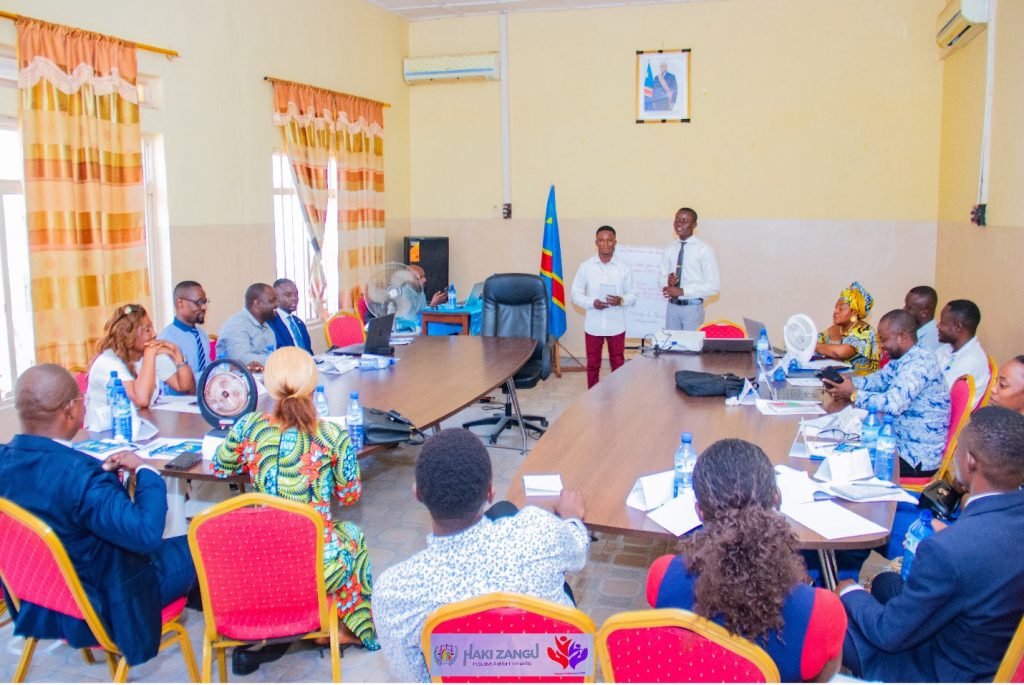
From 26 to 27 August 2026, lawyers from the network and coordinators of university legal clinics took part in a two-day training session in Kindu, Maniema province, under the project “Network of Lawyers and Legal Clinics for Strengthened Protection of Environmental Rights Defenders in the DRC” (RENFORCE). The meeting specifically aimed to build the capacity of justice actors and foster a clearer understanding of the mechanisms that accompany and protect environmental defenders. During the discussions, participants shared several situations arising in the province. The case of Ramazani Muteba, presented as an environmental defender, drew their particular attention. According to the lawyers, he faces prosecution for defamatory allegations in the cases referenced RMP 3278/DSS and RP 3393, following a complaint lodged by the mining company TERRA KARRA. The lawyers explained that these proceedings followed the defender’s denunciation of what he described as river pollution and the unlawful exploitation of mineral resources.
At the time of the training, the Tribunal had closed proceedings in the case one day earlier, on 25 August 2026. For the lawyers defending him, the situation raises a concern that reaches beyond the individual case: the risk of discouraging environmental defenders in their monitoring and advocacy work. “This kind of action can deter defenders from pursuing their monitoring and denunciation work. The risk is that it muzzles them, silences them, and prevents them from continuing to document the mining practices they consider unlawful,” said Maître Laini Tenda Keren, a lawyer defending Ramazani Muteba. In her view, recourse to the courts in such a context can therefore produce an effect that outlasts the proceedings themselves: it instills in defenders the fear that they will face judicial consequences in turn whenever they raise the alarm about alleged harm to the environment. Participants also stressed that the problem lies neither in the principle of justice nor in recourse to the courts, but in the need to guarantee that defenders can carry out their legitimate watchdog and alert activities without being intimidated for doing so. Any accusation must, of course, be open to examination by the competent courts, with due respect for the rights of all parties and the guarantees of a fair trial.
From this perspective, a network of lawyers and university legal clinics emerges as a concrete response. For participants, a defender facing a threat or proceedings must know promptly whom to turn to for initial legal guidance and, where necessary, professional accompaniment. Through RENFORCE, lawyers trained in Kindu are called upon to strengthen this chain of protection by improving case documentation, providing legal guidance, following up on proceedings, and coordinating among the various actors. The university legal clinic, for its part, offers a local space to provide information and guidance to defenders and communities. The Kindu experience will thus put a face to a risk that often remains less visible: environmental defenders gradually giving up on reporting and documenting the harm they observe, for fear of the consequences they might face.
For the actors gathered under RENFORCE, the response lies in stronger knowledge of rights, accessible legal assistance, and a network that can react when a defender’s situation demands it. The challenge is to ensure that fear of prosecution does not become an obstacle to environmental monitoring and to the defense of community rights.